Table of Contents
Momentum continues to build for Japan with global markets are waking up to something that long felt elusive: sustained, structural growth opportunities built on governance reform, capital innovation, and disciplined cash flows.
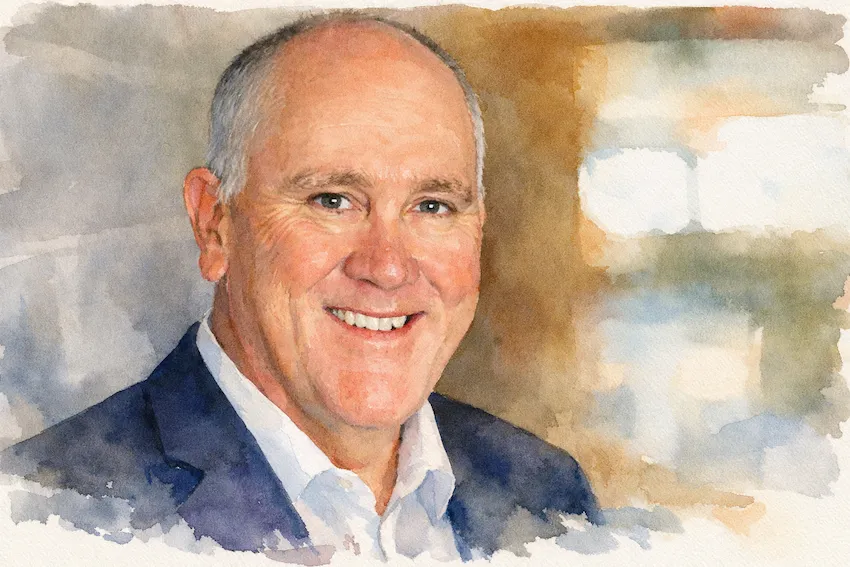
Marc Rowan, co-CEO of Apollo Global Management, is a believer and recently highlighted Japan as being poised for a significant economic resurgence, driven by improved shareholder governance, corporate reforms and renewed foreign investor confidence. This is a marked shift after decades of low growth and deflation, and it’s why global capital is revisiting Japanese equities and credit markets with fresh eyes. So much so he just took his whole team there.
Securitization: More Than Finance — A Macro Growth Engine
Part of the reason investors are thinking bigger is the evolving role of securitization in capital markets.
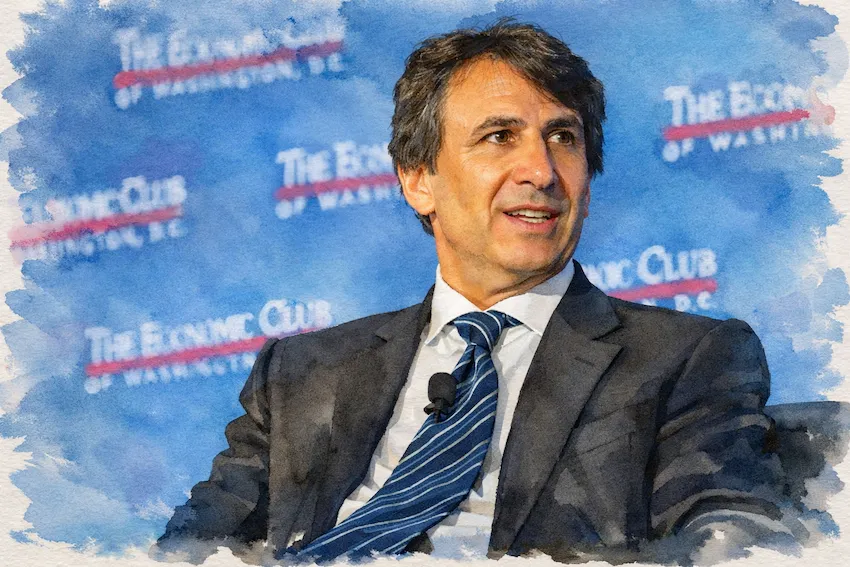
Apollo's chief economist Torsten Slok has long articulated a broader view of securitization’s role in expanding economic activity, suggesting that transforming illiquid cash flows into investable securities doesn’t just unlock capital for investors — it can effectively boost GDP through improved fiscal space and capital deployment in markets that had previously lacked scalable funding mechanisms. While academic research on related instruments such as GDP-linked securities suggests a potential for debt structures to enhance fiscal stability and space relative to GDP, the broader idea is that sophisticated securitization can make more capital available for productive use rather than idle balance sheets.
We were one of the early ones to recognize this trend, with both our investment in Japan but notably our landmark Esoteric SMRAI-2025 deal — a securitization that expanded the universe of assets viewed as creditworthy and institutional-grade.
HGV’s Esoteric SMRAI: Innovation Meets Institutional Capital
When Hilton Grand Vacations executed the Esoteric SMRAI transaction, it did more than refinance its own cash flows — it helped broaden the ABS market by validating new collateral types with high-quality recurring revenues. These “esoteric” assets — such as membership dues and scaled receivables — were not historically securitized at institutional scale. This transaction wasn’t merely about accessing lower cost funding — it was about expanding the investable asset class in a way that can mobilize capital at scale.
Because the Esoteric framework offered rated, transparent structures with predictable cash flows, it helped institutional investors allocate to asset origins previously considered non-institutional, effectively broadening the appetite and market depth for alternative securitized assets.
Convergence of Macro Trends: Governance, Growth, and Yield
Why does this matter in the context of Japan’s macro story?
- Governance shifts in Japan — including independence of boards, enhanced shareholder primacy, and improved capital allocation disciplines — are lowering structural drag in the economy and making Japan more investable.
- Capital markets innovation — like the Esoteric ABS markets that HGV is helping pioneer — create channels for capital that are more tightly aligned with long-term growth rather than short-term arbitrage.
- Macroeconomic frameworks increasingly recognize how structured finance can enhance fiscal space and accelerate productive investment, underscoring securitization’s potential beyond pure financing mechanics.
All three themes point to an investment environment that’s less about random beta chasing and more about disciplined, structural return drivers.
Why This Could Be a Once-in-a-Decade Opportunity
Taken together:
- Japan’s structural reforms are unlocking latent economic capacity.
- Markets are re-pricing governance improvements.
- The securitization ecosystem is evolving from a financing tool to a capital-allocation and growth facilitator.
- HGV’s Esoteric ABS effort reflects a broader paradigm where new asset classes are made investable, transparent, and yield-productive.
That’s a confluence rarely seen: macro reform + market innovation + institutional capital flows — and it’s not just at the country level, it’s at the asset class level too.
What’s Next: Deeper Sector Insights
In future deep dives, we’ll continue to unpack why this matters not only for macro allocators and ABS markets, but for specific high-quality, recurring revenue sectors, including:
- HOA Management Companies — where stable dues and enforcement revenue streams suggest compelling structured credit/valuation frameworks.
- Tokyu Land Corporation (東急不動産ホールディングス) — Ticker: 3289.T, a large diversified Japanese real estate company with significant property management, facility services, and condominium HOA management operations alongside development and investment business comes to mind.
- Music Royalty Companies in Japan — a cultural asset class with predictable cash flows and cross-border monetization upside, especially as governance and investor appetite evolve.
- NexTone Inc. (ネクストーン) - Ticker: 7094.T – A Tokyo-based company specializing in copyright management, licensing, royalties collection and distribution, digital content distribution and related services comes to mind.
These are sectors where structural growth patterns and capital market innovation intersect, and where the themes highlighted by Japan’s resurgence and HGV’s market leadership hint at rich, enduring investment opportunities.
Shockingly, this year's SFVegas appears to have no material discussion of APAC or Japan in its agenda. That could very well change next year.