Table of Contents
In a notable development for Korea’s structured finance market, Han & Company (한앤컴퍼니) has returned to the securitisation market for the first time in nearly ten years, using a landmark asset transaction tied to SK Shipping as the catalyst.
The move signals more than just a capital markets transaction. It marks the re-engagement of one of Korea’s most prominent private equity firms with structured finance — at a time when liquidity management, asset recycling, and balance-sheet optimisation are back in focus across Asia.
The Transaction: Recycling VLCC Assets into Liquidity
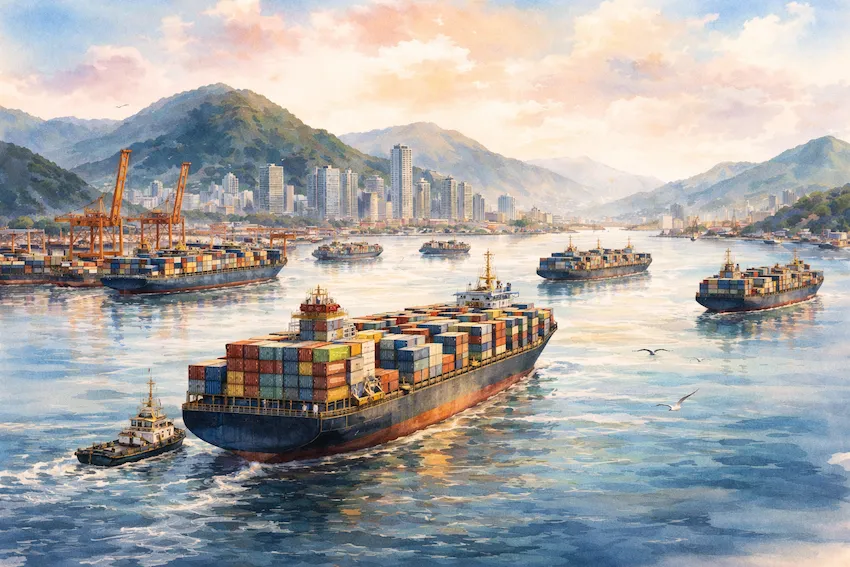
Han & Co recently completed the sale of 10 very large crude carriers (VLCCs) owned by SK Shipping, generating approximately KRW 1 trillion in proceeds. The vessels — bundled with associated long-term charter contracts — were sold to Pan Ocean, reinforcing Pan Ocean’s fleet scale while allowing SK Shipping to monetise mature assets.
What makes this development particularly significant is not simply the divestiture itself, but the capital markets overlay: Han & Co has returned to securitisation as part of its broader strategy to unlock value and manage portfolio liquidity.
The combination of hard shipping assets and contracted cash flows provides a natural foundation for structured financing. Long-term charters reduce earnings volatility, enhancing the predictability that fixed-income investors require. In that respect, the transaction reflects a disciplined private-equity playbook: stabilise revenues first, then refinance or securitise.
A Decade-Long Gap — and Why the Timing Matters
Han & Co had largely stayed away from securitisation markets over the past decade, instead relying on conventional debt financing and traditional exit strategies. Its re-entry suggests several broader themes:
- Improved investor appetite for asset-backed risk in Korea
- Greater acceptance of contracted infrastructure-like cash flows
- A maturing Korean securitisation framework
The Korean ABS market has evolved significantly since the mid-2010s. Regulatory clarity, institutional investor participation, and familiarity with structured products have all improved. For a large sponsor like Han & Co, this creates an opportunity to blend private equity value-creation with capital markets optimisation.
Strategic Rationale: Private Equity Meets Structured Finance
Han & Co’s strategy with SK Shipping since acquiring the company in 2018 has been methodical:
- Reduce exposure to spot-market volatility
- Emphasise long-term contracted shipping
- Strengthen balance sheet and operational discipline
- Monetise assets opportunistically
Securitisation fits naturally into this progression.
By structuring assets with durable cash flows into capital-markets instruments, sponsors can:
- Lower weighted average cost of capital
- Extend tenor beyond traditional bank loans
- Free up equity for redeployment
- Reduce refinancing risk
In cyclical industries like shipping, this approach is particularly powerful. Shipping assets alone can be volatile; shipping assets tied to long-term contracts resemble infrastructure credit.
Broader Market Implications
Han & Co’s return may have ripple effects across Korean private markets:
1. Revival of Shipping-Backed Structures
Shipping has historically been difficult to securitise due to freight-rate cyclicality. Contracted charter structures, however, change the equation. Expect renewed interest in asset-backed formats tied to logistics and maritime infrastructure.
2. Increased Sponsor-Driven ABS
Private equity firms in Korea may increasingly look to securitisation not just as a funding tool, but as a strategic value-realisation mechanism — particularly for portfolio companies with recurring revenue streams.
3. Institutional Demand for Yield
With regional fixed-income investors seeking stable spread product, contracted transport assets offer an appealing alternative to traditional corporate bonds.
Capital Recycling in a Slower Exit Environment
The timing also reflects broader market conditions. Full portfolio exits have become more complex amid valuation gaps and macro uncertainty. Partial asset sales combined with structured financing allow sponsors to:
- Crystallise gains incrementally
- Maintain upside in remaining assets
- Optimise leverage without triggering full exits
In that sense, Han & Co’s move is emblematic of a more flexible private-equity model — one that integrates capital markets into portfolio management rather than relying solely on strategic sales or IPOs.
What Comes Next?
Key questions now include:
- Will Han & Co pursue additional securitisations tied to SK Shipping or other portfolio companies?
- Could this open the door for broader infrastructure-style ABS issuance in Korea?
- Will other large Korean sponsors follow suit?
Given the scale and profile of Han & Co, its return to the securitisation market could serve as a catalyst for renewed structured-finance activity in 2026.
Conclusion
Han & Company’s re-entry into securitisation — nearly a decade after its last major issuance — underscores the increasing convergence of private equity and capital markets in Korea. By pairing operational restructuring with structured finance, the firm has demonstrated how sponsors can unlock liquidity, manage risk, and enhance returns in a disciplined manner.
In a market navigating slower exits and tighter liquidity, this transaction stands out not merely as a shipping deal — but as a signal that securitisation is once again becoming a strategic tool for Korea’s leading sponsors.